Set your checking buffer
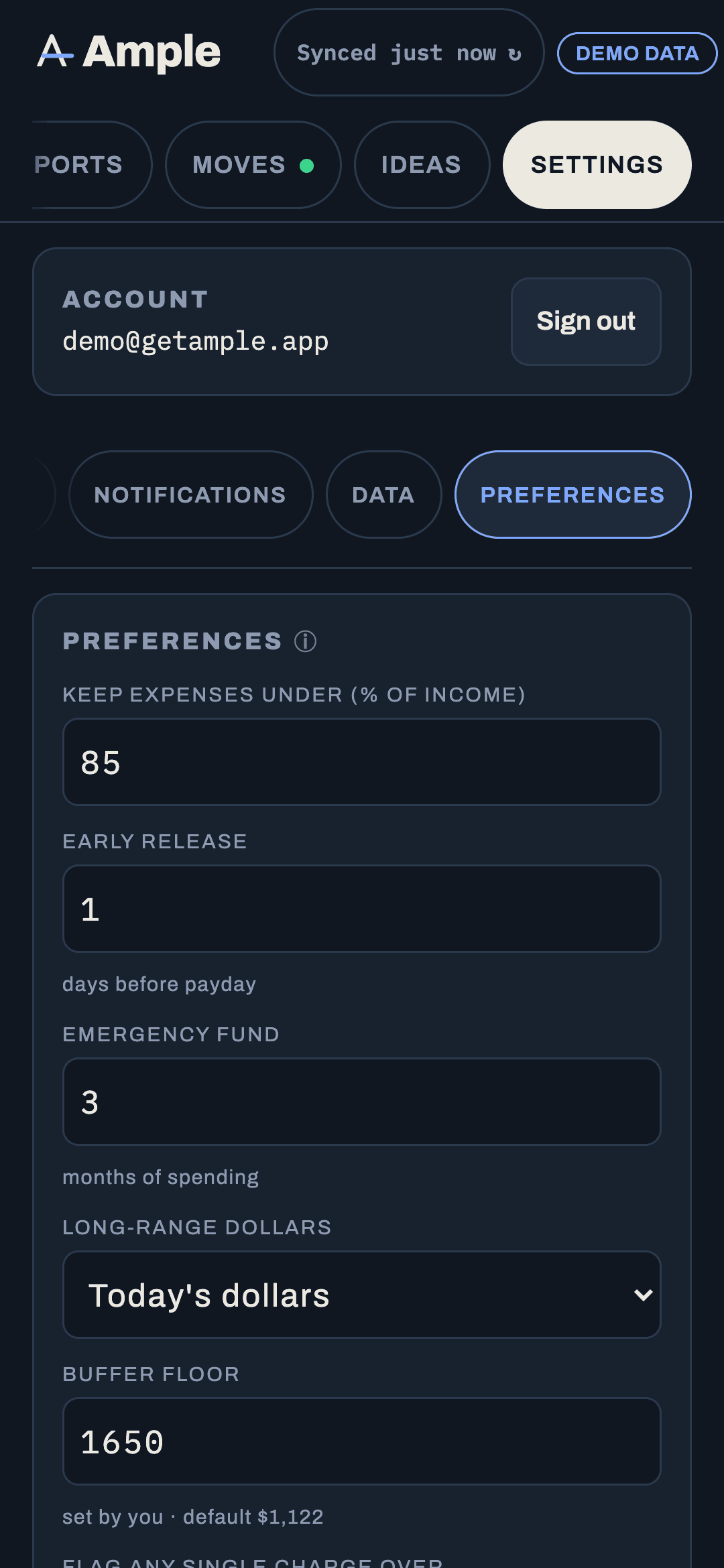
The buffer floor is the balance checking never dips under. Set it in Preferences, and Ample keeps it before anything routes to savings.
Updated September 5, 2026 · 2 min read
The checking buffer is the one number that stops a biweekly paycheck from turning into overdraft fees. It is the balance you never plan to spend, so a bill that clears two days before payday, or a normal week of spending in the gap, never bounces.
Set it
- Open Settings › Preferences.
- Under Checking buffer floor, enter the amount.
- Choose the checking account it applies to if you have more than one.
That is it. From the next paycheck plan on, Ample keeps the floor first.
How much
A good floor is your largest single bill between two paydays plus a week of ordinary spending. For someone whose biggest bill is $900 and who spends about $1,300 a month on groceries, gas and eating out, that is around $1,200. If you are starting from zero, set the floor at the largest bill alone, hold it for two paychecks, then raise it. The checking buffer guide has a calculator that works it out from your numbers.
What the floor changes
- The paycheck plan. On payday, bills due before the next check come first; then, if checking is under the floor, the plan sets aside the difference; only what sits above the floor is offered to savings and goals.
- Today. Checking is shown as "above the floor" rather than as a raw balance. The cycle chip reads against the floor, not against zero.
- The verdict. A dip under the floor is a real driver. A $3 dip is a chip; a dip the size of a bill is a louder one.
- Savings suggestions. Ample never proposes a transfer that would push checking under the floor, and it caps proposals at what the month's carryover plus the floor allow.
- Long-range and monthly projections. The floor is treated as money that stays in checking, so a projection does not count it as spendable.
When the floor is not funded yet
Nothing breaks. The plan shows a top-up each paycheck until the floor is met, sized to what that check can spare after bills. If a 3-paycheck month is coming, Ample suggests using the extra check to finish the floor in one go, because that is the fastest way to do it without changing a normal month's budget.
Buffer vs emergency fund
The buffer is small and lives in checking; it handles timing. An emergency fund is larger and lives in savings; it handles events. Ample tracks the emergency fund separately on the Savings page with a months-of-bills target you set in Preferences. Fund the buffer first: it is smaller, and it protects the emergency fund from being raided for a timing problem.
More in Getting started
Still stuck?
Tell us what you were trying to do and what happened. A person reads every message.
Contact support